
Call Us For Easy
Confidential Assistance
503-506-0101
It only takes 5 minutes to get started
Meth Addiction Treatment for Eugene Residents: The Willamette Valley Healing Advantage
Posted on: March 21st, 2026 by writer

Table of Contents
- The Changing Face of Meth Addiction in Lane County
- The Critical Gap: Why Methamphetamine Demands More Than Weekly Counseling
- What Makes Residential Treatment the Gold Standard for Meth Recovery
- Why Location Matters: The Therapeutic Power of the Willamette Valley Setting
- Your Journey to Recovery: How Pacific Ridge Addresses Every Aspect of Meth Addiction
- Key Takeaways
The methamphetamine crisis has hit the Pacific Northwest particularly hard, with Oregon ranking among the states most severely impacted by stimulant use disorders. For Eugene residents struggling with meth addiction, the challenges are intensified by the shift from locally-produced methamphetamine to the more potent, psychosis-inducing P2P (phenyl-2-propanone) methamphetamine flooding the market. According to the Oregon Health Authority, methamphetamine is now the most common drug involved in unintentional overdose deaths across the state, frequently appearing alongside fentanyl. In Lane County specifically, emergency departments have seen methamphetamine-related visits climb to 17.5% of all substance-related cases in 2023—a troubling upward trajectory from just 12.5% in 2020. For those battling this powerful addiction, outpatient programs often fall short. The proximity to triggers, the severity of withdrawal symptoms, and the psychiatric complications of chronic meth use demand a more intensive approach. This is where the “Willamette Valley Healing Advantage” comes into play—offering Eugene residents a path to recovery that combines evidence-based clinical treatment with the restorative power of nature, all within medically supervised residential care at Pacific Ridge. In this article, we’ll explore why inpatient treatment is critical for methamphetamine recovery, what makes the Willamette Valley setting uniquely therapeutic, and how Pacific Ridge’s comprehensive approach addresses the specific challenges facing Eugene-area residents.
The Changing Face of Meth Addiction in Lane County
The methamphetamine epidemic affecting Eugene residents today looks drastically different from the drug crisis of a decade ago. The shift from locally synthesized pseudoephedrine-based methamphetamine to mass-produced P2P methamphetamine imported from international cartels has fundamentally changed the nature of addiction treatment needs in our community.
The P2P Meth Difference
Today’s methamphetamine is not your predecessor’s drug. P2P methamphetamine is significantly more potent and far more likely to cause severe psychiatric symptoms including paranoia, hallucinations, and violent behavior. This chemical difference means that individuals using contemporary meth face substantially higher risks of experiencing drug-induced psychosis—a medical emergency requiring immediate professional intervention that most outpatient settings cannot adequately address.
Local Impact Statistics
The numbers paint a sobering picture of the methamphetamine crisis in our region:
- Over 40% of public treatment admissions in Oregon list methamphetamine as the primary or secondary substance of abuse
- Lane County has experienced a 40% increase in meth-related emergency department visits between 2020-2023
- Meth-involved overdose deaths in Oregon have nearly doubled from 321 in 2020 to an estimated 610 in 2023
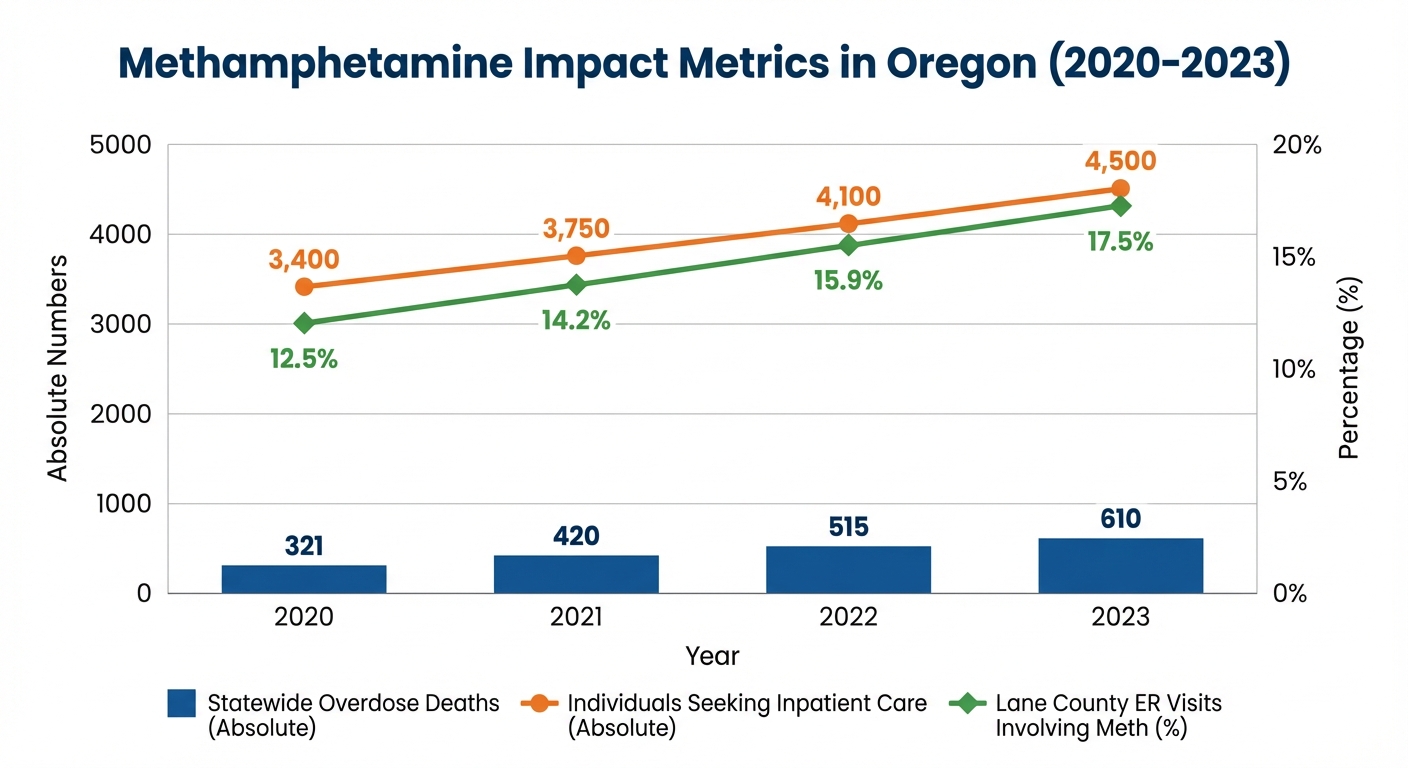
This chart illustrates the alarming escalation of methamphetamine’s impact across Oregon, with Lane County mirroring these troubling statewide trends. The simultaneous increase in overdose deaths, emergency room visits, and treatment-seeking individuals demonstrates that this crisis is accelerating, not stabilizing.
The Co-Occurring Crisis
Complicating matters further, methamphetamine is increasingly appearing in combination with fentanyl—a deadly pairing that creates compounded overdose risks. This polysubstance use pattern means that Eugene-area users face dangers from both the psychiatric complications of meth and the respiratory depression risks of opioids, often simultaneously.
Why Eugene Residents Are Particularly Vulnerable
Several factors make recovery particularly challenging for Eugene residents attempting to maintain sobriety while remaining in their familiar urban environment:
- Accessibility of supply: The drug supply chain remains robust and easily accessible throughout the Eugene metro area
- Social networks: Remaining in the same community means continued proximity to people and places associated with active addiction
- Environmental triggers: The streets, neighborhoods, and even specific locations where individuals previously used become powerful psychological triggers that undermine recovery efforts
- Limited intensive care options: While Eugene offers various outpatient services, the gap in comprehensive residential treatment means many residents must look beyond city limits for the level of care methamphetamine addiction truly requires
The Critical Gap: Why Methamphetamine Demands More Than Weekly Counseling
For many Eugene residents, the initial response to recognizing a methamphetamine problem is seeking outpatient counseling or attending weekly support groups. While these interventions can play valuable roles in long-term recovery maintenance, they frequently prove insufficient for addressing the acute phase of severe meth dependency. Understanding why requires examining the unique neurological and psychological challenges this particular addiction creates.
No FDA-Approved Medications
Unlike opioid addiction, where medications like buprenorphine and methadone have revolutionized treatment outcomes, there are currently no FDA-approved medications specifically for methamphetamine use disorder. This absence means that recovery relies almost entirely on behavioral interventions and environmental controls—making the treatment setting itself a critical component of success rather than merely a backdrop for medication management.
The Neurochemical Challenge
Methamphetamine causes severe depletion of dopamine receptors in the brain—the neurotransmitters responsible for experiencing pleasure, motivation, and reward. During the withdrawal period, patients experience:
- Profound depression: Not merely feeling sad, but a neurochemically-driven inability to experience positive emotions
- Anhedonia: The complete inability to feel pleasure from activities that previously brought joy
- Extreme fatigue: Overwhelming exhaustion that makes even basic daily tasks feel insurmountable
- Cognitive impairment: Difficulties with memory, attention, and decision-making
These symptoms make outpatient relapse rates exceptionally high during the first 30-90 days of attempted sobriety. When every waking moment feels joyless and exhausting, and relief is just a phone call away, the individual in outpatient care faces a near-impossible challenge without the protective barrier of a residential environment.
Meth-Induced Psychosis
Chronic P2P meth use frequently leads to severe paranoia, hallucinations, and violent behavior. These psychiatric emergencies require 24/7 medical supervision that outpatient settings simply cannot provide. A patient experiencing auditory hallucinations commanding them to use, or paranoid delusions about being pursued, needs immediate professional intervention—not an appointment scheduled for next Tuesday afternoon.
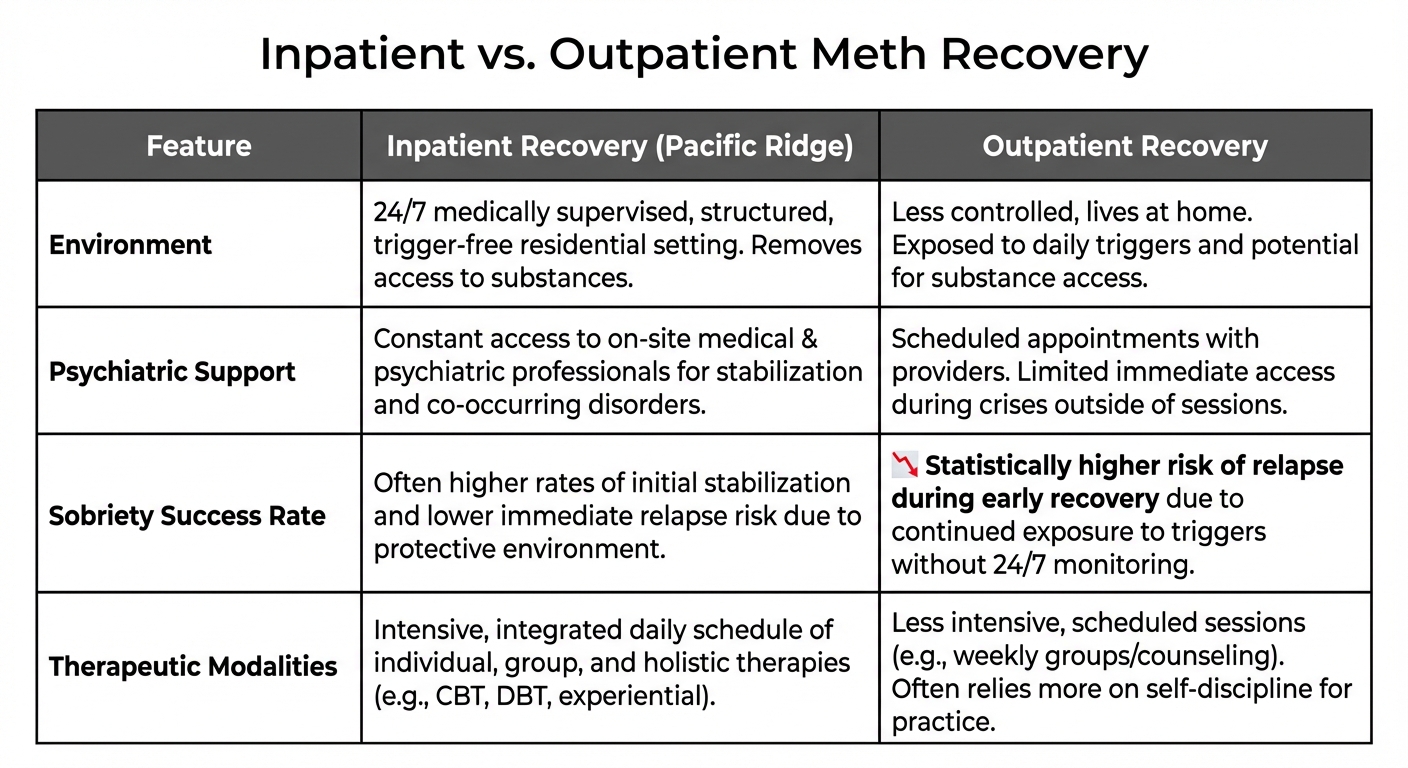
This comparison reveals the fundamental structural differences between intensive inpatient care and standard outpatient treatment. For severe methamphetamine dependency, these differences often determine whether recovery succeeds or fails.
The Environmental Trigger Problem
For Eugene residents attempting outpatient recovery, remaining in the same urban environment means continuous exposure to people, places, and stressors intimately connected with their drug use. The specific street corner where they used to meet their dealer. The friend’s apartment where they last got high. Even the particular time of day when they would typically use—all of these become powerful triggers that activate cravings and undermine recovery efforts. Outpatient treatment essentially asks individuals to maintain sobriety while swimming in an ocean of reminders and temptations. While possible for some, the statistical reality shows that most people with severe stimulant dependency require physical separation from these triggers during the critical early recovery period.
Statistical Reality
Research on stimulant use disorder treatment consistently demonstrates that intensive residential programs achieve significantly higher retention rates and better long-term outcomes compared to outpatient care for individuals with severe dependency. The difference isn’t marginal—it’s often the difference between sustained recovery and rapid relapse.
What Makes Residential Treatment the Gold Standard for Meth Recovery
Understanding why comprehensive inpatient care offers the best outcomes for methamphetamine addiction requires examining both the immediate medical necessities and the evidence-based therapeutic approaches that residential settings uniquely enable.
Medical Management of Acute Withdrawal
The early days and weeks of methamphetamine withdrawal present serious medical and psychiatric risks that demand professional supervision: Safe detox protocols address the constellation of symptoms including severe depression, anxiety, and potential psychosis. Unlike alcohol or benzodiazepine withdrawal—which can be medically dangerous due to seizure risks—meth withdrawal primarily presents psychiatric dangers. However, these psychiatric symptoms can be life-threatening, with suicide risk elevated during the acute withdrawal period. 24/7 psychiatric support provides immediate crisis intervention when patients experience overwhelming depression, suicidal ideation, or paranoid delusions. In a residential setting, trained mental health professionals can intervene within minutes, not hours or days. Medical monitoring for cardiovascular complications addresses the damage that chronic meth use inflicts on the heart and circulatory system. Methamphetamine significantly increases heart rate and blood pressure, and chronic users often have underlying cardiovascular damage that requires monitoring during the stress of withdrawal.
Evidence-Based Treatment Approaches
While medical stabilization addresses the immediate crisis, lasting recovery requires comprehensive behavioral interventions. Three evidence-based approaches form the foundation of effective methamphetamine treatment: Cognitive Behavioral Therapy (CBT) stands as the gold standard for stimulant use disorders. CBT helps patients identify and modify the thought patterns and behaviors that lead to drug use. Rather than simply telling patients “don’t use drugs,” CBT teaches specific skills for recognizing triggers, challenging the thoughts that rationalize use, and implementing alternative coping strategies. In a residential setting, CBT isn’t limited to one hour per week. Patients engage in daily individual sessions, practice skills throughout their day, and receive immediate feedback from counselors who observe their real-time challenges and successes. Contingency Management (CM) represents one of the most effective behavioral therapies for methamphetamine addiction. This approach provides tangible incentives for positive behaviors—such as drug-free urine tests, attendance at therapy sessions, and completion of treatment plan goals. While the concept might seem simple, research consistently demonstrates that CM significantly improves treatment retention and reduces drug use during treatment. The Matrix Model offers a structured, multi-component approach designed specifically for stimulant addictions. This comprehensive framework incorporates early recovery skills training, relapse prevention strategies, family education, social support development, and consistent monitoring—all delivered in a coordinated, intensive format that residential treatment environments are uniquely positioned to provide.
The Critical First 30 Days
Research and clinical experience consistently demonstrate that the initial month of recovery represents the highest-risk period for relapse. During these crucial weeks, the brain remains in acute neurochemical crisis, cravings reach their peak intensity, and the individual hasn’t yet developed robust coping strategies or built a recovery support network. This is precisely why the initial 30 days require the intensive structure and support that only residential care can provide. Outpatient care during this period essentially sends patients into battle without armor, hoping willpower alone will carry them through the most dangerous phase of recovery.
Breaking the Cycle
Physical separation from the drug supply and associated networks creates what clinicians call a “circuit breaker” effect. Just as an electrical circuit breaker prevents damage by interrupting dangerous current flow, residential treatment interrupts the automatic patterns of thinking, behavior, and environment that perpetuate addiction. This separation accomplishes several crucial goals:
- Eliminates easy access: Using requires significant effort rather than a simple phone call
- Disrupts automatic routines: The daily patterns associated with drug use are completely interrupted
- Creates space for new identity formation: Distance from the “using environment” allows patients to begin constructing a new sense of self separate from their addiction identity
- Reduces anxiety: Removing constant proximity to drugs paradoxically reduces the anxiety and preoccupation that comes from being surrounded by temptation
Higher Retention Equals Better Outcomes
The clearest evidence for residential treatment’s superiority comes from retention data. Patients who remain in structured residential environments during the vulnerable early recovery period demonstrate significantly higher completion rates and sustained sobriety compared to those attempting outpatient care during this same critical window. Treatment doesn’t work if people don’t stay engaged with it.
Why Location Matters: The Therapeutic Power of the Willamette Valley Setting
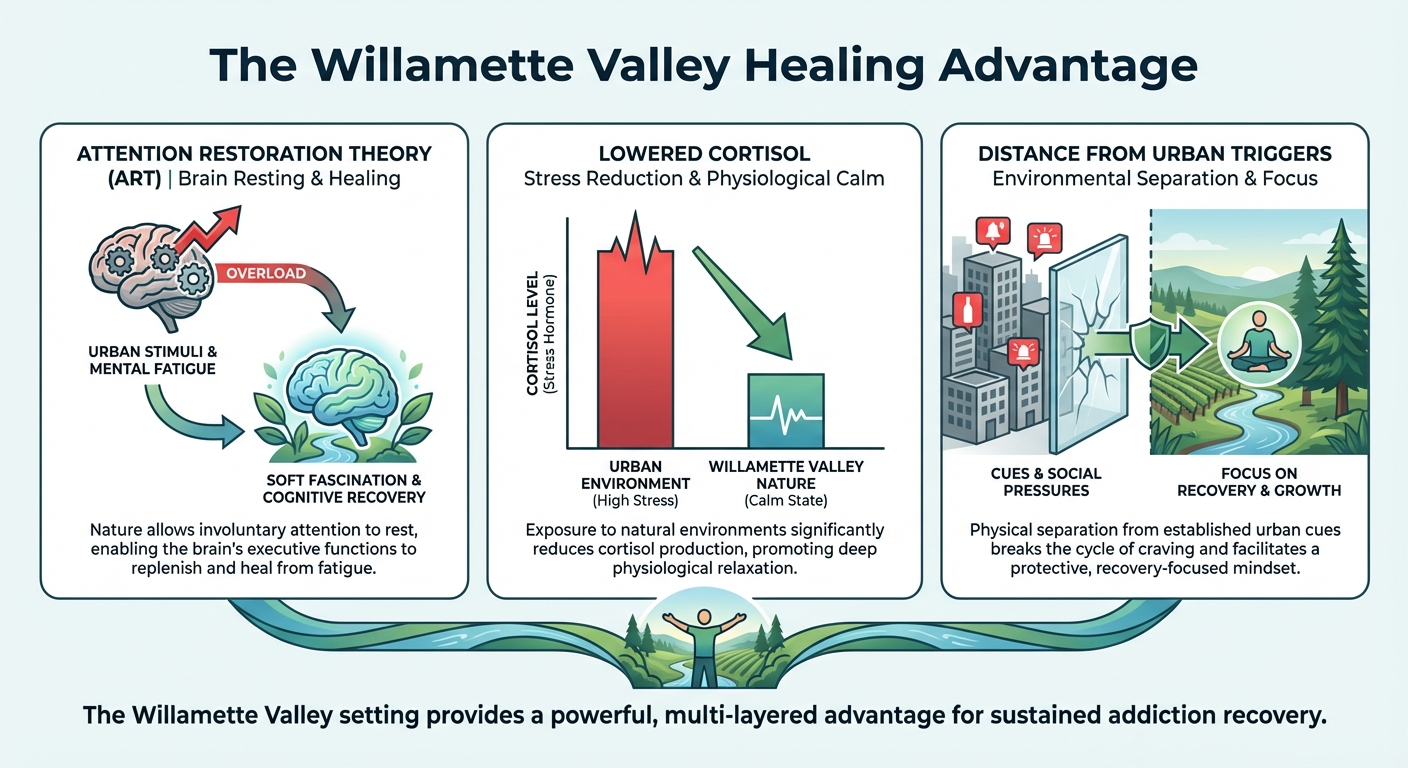
When most people think about addiction treatment facilities, they focus on the clinical programming—the therapy sessions, medical care, and support groups. While these elements are undeniably critical, a growing body of research demonstrates that the physical environment itself plays a significant therapeutic role, particularly during recovery from methamphetamine addiction.
More Than Scenery—It’s Clinical Science
Pacific Ridge’s location in the Willamette Valley isn’t simply an aesthetic amenity—it’s an evidence-based clinical advantage. Research published by the National Institutes of Health demonstrates that exposure to natural environments significantly reduces cortisol (stress hormone) levels, lowers heart rate, and mitigates symptoms of anxiety and depression. For individuals withdrawing from methamphetamine—whose stress hormone levels are severely dysregulated and whose anxiety and depression symptoms are at crisis levels—the natural environment provides measurable physiological benefits that accelerate healing. Consider the contrast: A patient attempting recovery in urban Eugene faces constant sensory assault—traffic noise, sirens, crowds, concrete, and artificial light. Each of these environmental factors increases stress, disrupts sleep, and keeps the nervous system in a state of hyperarousal. Now imagine that same patient in the quiet expanses of the Willamette Valley, surrounded by forests, open skies, and natural soundscapes. The physiological difference is substantial and clinically significant.
Attention Restoration Theory
Natural settings engage what researchers call “soft fascination”—allowing the brain’s directed attention mechanisms to rest and recover. For recovering meth users suffering from severe cognitive fatigue and attention deficits, the quiet, expansive landscape of the Willamette Valley accelerates cognitive healing. Methamphetamine causes significant damage to the brain’s executive function systems—the neural networks responsible for decision-making, impulse control, and sustained attention. During early recovery, these systems are severely compromised, making even simple tasks mentally exhausting. The natural environment provides what urban settings cannot: the opportunity for the brain to process information without constant demands on already-depleted attention resources.
Geographic Separation as Therapeutic Tool
The psychological benefit of physical distance from Eugene’s urban environment extends beyond simply avoiding triggers. Traveling to the Willamette Valley for treatment creates what psychologists call a “liminal space”—a threshold between the old life of active addiction and the new life of recovery. This geographic transition helps patients:
- Create psychological distance from the person they were during active addiction
- Establish a clear demarcation between “the life I’m leaving” and “the life I’m building”
- Reduce obsessive thinking about obtaining drugs, which diminishes when immediate access becomes impossible
- Experience hope through environmental change, as the new setting symbolizes the possibility of a genuinely different future
The Sensory Reset
Chronic methamphetamine use severely disrupts the brain’s sensory processing systems. Users often experience distorted perception, hypersensitivity to stimuli, and disrupted circadian rhythms. The natural environment of the Willamette Valley provides what might be called a “sensory reset”:
| Natural Element | Therapeutic Benefit |
|---|---|
| Clean Air | Helps restore healthy respiratory function damaged by smoking meth |
| Natural Sounds | Recalibrates auditory processing systems accustomed to the chaos of urban noise |
| Natural Light Cycles | Helps restore circadian rhythms disrupted by the drug’s severe impact on sleep-wake patterns |
| Visual Complexity | Engages the visual cortex in healing ways that manufactured environments cannot replicate |
Pacific Ridge’s Integration of Nature and Treatment
What distinguishes Pacific Ridge isn’t merely its location in the Willamette Valley, but the intentional integration of the natural setting into therapeutic programming. Nature isn’t background scenery—it’s actively incorporated as a therapeutic tool. Patients engage in outdoor activities, reflection time in natural settings, and therapeutic exercises specifically designed to leverage the healing properties of the environment. This integration creates a synergistic effect where clinical interventions and environmental benefits reinforce each other, accelerating recovery in ways that indoor-only programming cannot match.
Your Journey to Recovery: How Pacific Ridge Addresses Every Aspect of Meth Addiction
Understanding what actually happens during residential treatment helps demystify the recovery process and allows Eugene residents to make informed decisions about their care. Pacific Ridge’s comprehensive approach addresses every dimension of methamphetamine addiction through structured, evidence-based programming.
Initial Assessment and Medical Stabilization
Recovery begins with a thorough evaluation addressing physical health, psychiatric needs, and addiction severity. This comprehensive assessment examines:
- Medical status: Cardiovascular health, dental issues, infections, nutritional deficiencies, and other physical consequences of chronic meth use
- Psychiatric conditions: Meth-induced psychosis, depression, anxiety disorders, trauma history, and other mental health concerns
- Addiction severity: Length of use, methods of administration, previous treatment attempts, and current level of physical and psychological dependency
Based on this assessment, the clinical team develops an individualized treatment plan that addresses each patient’s specific needs rather than applying a one-size-fits-all approach. Medical stabilization focuses on safely managing withdrawal symptoms through psychiatric medications when appropriate, monitoring for complications, and beginning the process of restoring physical health through proper nutrition, sleep hygiene, and medical care for addiction-related health problems.
Structured Daily Programming
Residential treatment at Pacific Ridge provides intensive, structured programming that fills each day with therapeutic activities designed to support recovery: Individual therapy sessions utilizing Cognitive Behavioral Therapy and other evidence-based modalities allow patients to work one-on-one with therapists on their specific challenges, trauma history, and personal recovery goals. These sessions provide the depth and personalization that group settings cannot achieve. Group therapy incorporating the Matrix Model approach brings patients together to learn from shared experiences, practice interpersonal skills, challenge each other’s rationalizations, and build the peer support networks essential for long-term recovery. Group sessions cover topics ranging from trigger identification to healthy relationship skills to practical life management. Family education and support programming recognizes that addiction affects entire family systems. When appropriate and beneficial, Pacific Ridge involves family members in education sessions that help them understand addiction, learn how to support recovery without enabling, and begin healing the relationship damage that active addiction created. Therapeutic activities integrating the natural environment leverage the Willamette Valley setting through guided nature walks, outdoor reflection time, and activities that combine physical movement with mindfulness practices in natural settings.
Addressing Co-Occurring Disorders
Methamphetamine addiction rarely exists in isolation. Many patients struggle with co-occurring mental health conditions—depression, anxiety, PTSD, or bipolar disorder—that both contributed to their drug use and are exacerbated by it. Pacific Ridge’s dual diagnosis treatment approach simultaneously addresses both the addiction and the underlying mental health conditions. This integrated approach recognizes that treating only the addiction while ignoring depression is like treating only half the patient. Likewise, managing psychiatric symptoms without addressing the addiction leaves patients vulnerable to continued drug use that undermines their mental health treatment. True recovery requires addressing the whole person.
Life Skills and Recovery Tools
Beyond addressing why patients used methamphetamine and treating the immediate consequences, effective treatment equips individuals with practical skills for maintaining sobriety in the real world:
- Relapse prevention strategies teach patients to recognize early warning signs, implement emergency coping plans, and navigate high-risk situations
- Coping mechanisms provide alternatives to drug use for managing stress, emotional pain, boredom, and social anxiety
- Building healthy routines helps patients structure their days around recovery-supportive activities rather than the chaos of active addiction
- Healthy relationship skills teach patients how to form connections based on mutual support rather than shared drug use
Transition Planning
Recovery doesn’t end when residential treatment concludes—in many ways, that’s when the real work begins. Pacific Ridge develops comprehensive transition plans that prepare patients for successful reintegration including:
- Aftercare treatment recommendations (outpatient therapy, support groups, continuing care)
- Sober living arrangements when returning directly to previous housing would pose high relapse risk
- Connection to community resources and recovery support networks
- Employment assistance and educational planning
- Ongoing medication management for psychiatric conditions when appropriate
Length of Stay Considerations
While 30-day programs provide crucial intervention during the acute crisis phase, research consistently demonstrates that 60-90 day programs offer significantly better long-term outcomes, particularly for severe methamphetamine dependency. The additional time allows for more complete neurological healing, deeper processing of underlying issues, more thorough skill development, and greater stability before transitioning to less intensive aftercare.
Key Takeaways
The methamphetamine epidemic has brought devastating consequences to Eugene and Lane County, with increasingly potent drugs causing severe physical, psychological, and social harm. For those caught in the grip of meth addiction, the path forward can feel impossibly difficult—but recovery is not only possible, it’s happening every day. The evidence is clear: comprehensive inpatient treatment offers the best chance for lasting recovery from methamphetamine addiction. The combination of medical supervision, evidence-based therapies like Cognitive Behavioral Therapy and the Matrix Model, and the therapeutic environment of the Willamette Valley creates optimal conditions for healing both brain and body. For Eugene residents, Pacific Ridge offers something more than standard addiction treatment—it provides a genuine healing advantage through its unique integration of clinical excellence and natural restoration. By stepping away from the triggers and chaos of active addiction into a structured, supportive environment designed specifically for recovery, individuals give themselves the greatest possible opportunity for transformation. The journey from active methamphetamine addiction to sustained sobriety is undeniably challenging. It requires courage to acknowledge the problem, strength to ask for help, and commitment to engage fully with the treatment process. But with the right support and setting, lasting recovery moves from wishful thinking to achievable reality. If you or a loved one is struggling with methamphetamine addiction in the Eugene area, reaching out for help is the first step toward reclaiming your life. The Willamette Valley Healing Advantage isn’t just a marketing phrase—it’s a clinically-grounded approach that has helped countless individuals break free from meth’s grip and build lives of purpose, connection, and hope. Recovery begins with a single decision: choosing to believe that something better is possible. Pacific Ridge stands ready to walk alongside you through every step of that journey, providing the medical care, therapeutic support, and healing environment that make lasting transformation achievable.
Ready to Begin Your Recovery Journey?
Contact Pacific Ridge today to learn more about our comprehensive methamphetamine addiction treatment program. Our admissions team is available to answer your questions, discuss your specific situation, and help you understand how the Willamette Valley Healing Advantage can support your journey to lasting sobriety.
References:
- National Institute on Drug Abuse (NIDA). (2021). Methamphetamine DrugFacts. https://nida.nih.gov/publications/drugfacts/methamphetamine
- Oregon Health Authority (OHA). (2023). Oregon Substance Use Disorder Data Dashboard. https://www.oregon.gov/oha/ph/preventionwellness/substanceuse/opioids/pages/data.aspx
- Lane County Public Health. (2022). Community Health Assessment: Substance Use. https://www.lanecounty.org/departments/health_and_human_services/public_health
- Substance Abuse and Mental Health Services Administration (SAMHSA). (2022). Treatment Episode Data Set (TEDS). https://www.samhsa.gov/data/data-we-collect/teds-treatment-episode-data-set
- National Institute on Drug Abuse (NIDA). (2019). What treatments are effective for people who misuse methamphetamine? https://nida.nih.gov/publications/research-reports/methamphetamine/what-treatments-are-effective-people-who-misuse-methamphetamine
- SAMHSA. (2021). Treatment of Stimulant Use Disorders. https://store.samhsa.gov/product/Treatment-of-Stimulant-Use-Disorder/PEP20-06-01-001
- Bratman, G. N., et al. (National Center for Biotechnology Information – NCBI). (2019). Nature and mental health: An ecosystem service perspective. https://www.ncbi.nlm.nih.gov/pmc/articles/PMC8125471/
- SAMHSA. (2020). The Matrix Model: Intensive Outpatient Alcohol and Drug Treatment Program. https://store.samhsa.gov/product/matrix-model-intensive-outpatient-alcohol-and-drug-treatment-program/sma13-4152
Posted in Treatment
Are you looking for help?
Pacific Ridge is a residential drug and alcohol treatment facility about an hour from Portland, Oregon, on the outskirts of Salem. We’re here to help individuals and families begin the road to recovery from addiction. Our clients receive quality care without paying the high price of a hospital. Most of our clients come from Oregon and Washington, with many coming from other states as well.
Pacific Ridge is a private alcohol and drug rehab. To be a part of our treatment program, the client must voluntarily agree to cooperate with treatment. Most intakes can be scheduled within 24-48 hours.
Pacific Ridge is a State-licensed detox and residential treatment program for both alcohol and drugs. We provide individualized treatment options, work closely with managed care organizations, and maintain contracts with most insurance companies.
Quick links
Recent Posts
- Meth Addiction Treatment for Eugene Residents: The Willamette Valley Healing Advantage
- Finding a Private Fentanyl Detox Center Near Portland: Why Leaving the City Helps Recovery
- From Pills to Fentanyl: Understanding the Progression of Opioid Addiction
- Sober Activities in the Willamette Valley: Rediscovering Life Without Substances
Contact Us
Pacific Ridge- 1587 Pacific Ridge Ln SE
Jefferson, OR 97352 - Email:
[email protected] - Phone:
503-506-0101 - Fax:
503-581-8292

- Copyright © 2026 Pacific Ridge - All Rights Reserved. Web Design & SEO by Lithium
- Follow us on