
Call Us For Easy
Confidential Assistance
503-506-0101
It only takes 5 minutes to get started
Navigating Life After Inpatient Treatment: The Importance of a Solid Aftercare Plan
Posted on: July 16th, 2026 by writer

Table of Contents
- The Critical Window: Understanding Your Brain’s Vulnerability After Treatment
- Relapse Doesn’t Mean Failure: Treating Addiction Like the Chronic Disease It Is
- The Numbers Don’t Lie: How Aftercare Increases Your Chances of Long-Term Sobriety
- Building Your Safety Net: What a Solid Aftercare Plan Should Include
- Navigating Oregon’s Behavioral Health Landscape: Why Proactive Planning Is Critical
- Key Takeaways
You’ve completed your residential treatment program. You feel hopeful, clear-headed, and ready to rebuild your life. But within days of returning home, old triggers resurface—stress from work, family tensions, even just walking past a familiar place. Suddenly, the cravings you thought you’d conquered come rushing back.
This scenario plays out more often than most people realize. Here’s the critical insight many don’t understand: inpatient treatment is a powerful first step, but addiction is a chronic condition that requires ongoing management, much like diabetes or asthma. Without structured aftercare, relapse rates can reach 40-60% within the first year.
This article explains why the first 90 days post-discharge are the most vulnerable, what happens in your brain during this period, and how a comprehensive aftercare plan dramatically increases your chances of long-term sobriety. At Pacific Ridge, treatment doesn’t end at discharge—it’s the beginning of a lifelong partnership in recovery.
The Critical Window: Understanding Your Brain’s Vulnerability After Treatment
The first three months after leaving inpatient care represent the highest risk period for relapse due to both neurobiological and environmental factors. Understanding what’s happening in your body and mind during this time can help you prepare for the challenges ahead.
Post-Acute Withdrawal Syndrome: Your Brain Is Still Healing
Even after detox, your brain is still in recovery mode. Post-Acute Withdrawal Syndrome (PAWS) is a collection of symptoms that can persist for weeks or even months after you’ve stopped using substances. These symptoms include mood swings, anxiety, sleep disturbances, irritability, and what many describe as “brain fog”—difficulty concentrating or making decisions.
PAWS occurs because chronic substance use fundamentally rewires your brain’s chemistry. The healing process doesn’t end when physical withdrawal symptoms subside; your brain needs time to recalibrate and return to normal functioning.
The Neuroscience Behind Cravings
Chronic substance use alters three key areas of the brain: the basal ganglia (reward circuitry), the prefrontal cortex (decision-making), and the extended amygdala (stress response). During early recovery, these circuits are still recalibrating, making you hypersensitive to triggers that wouldn’t have affected you during the structured environment of residential treatment.
Your brain essentially learned to associate certain people, places, emotions, and situations with substance use. When you encounter these triggers in early recovery, your brain reacts powerfully, even though you’re committed to sobriety. This isn’t a moral failing—it’s neurobiology.
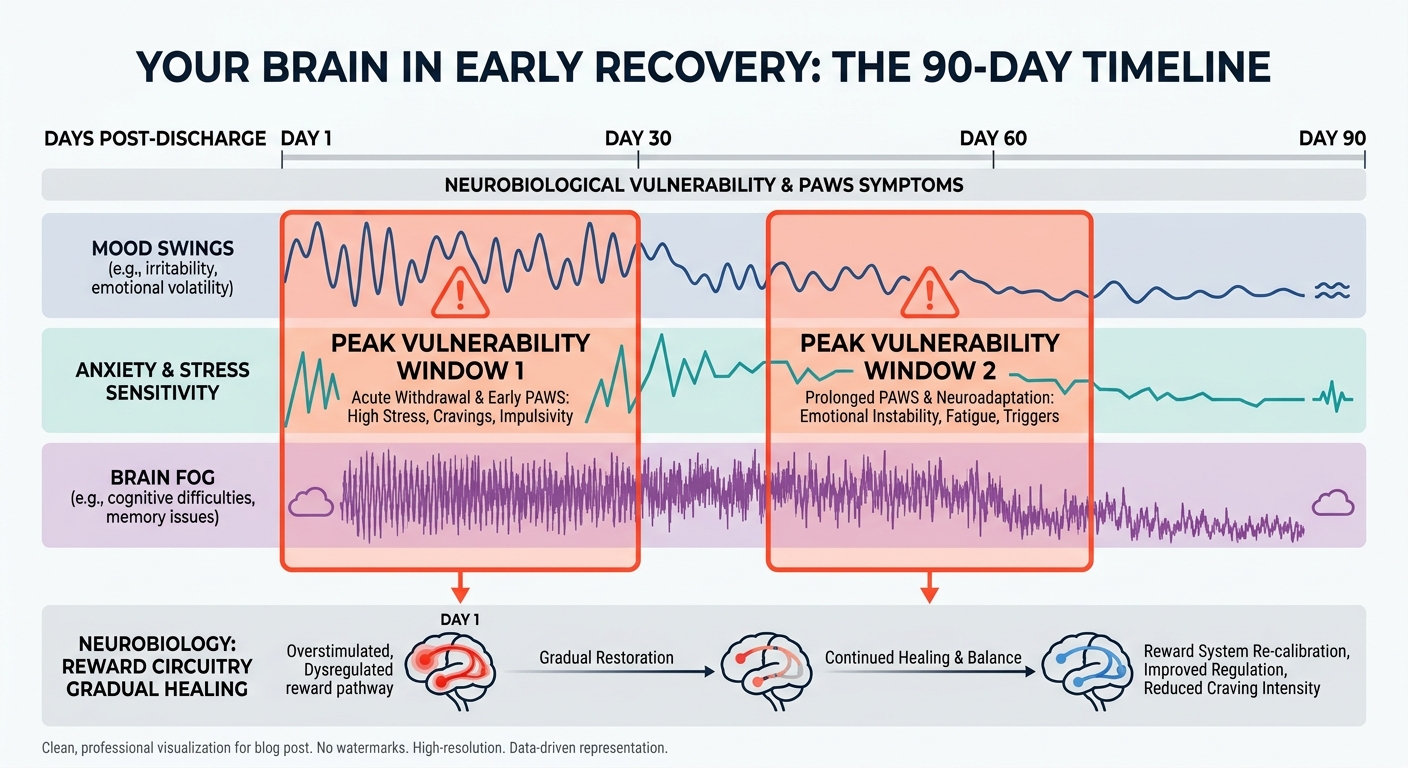
This timeline shows how PAWS symptoms typically evolve over the first 90 days. Notice that while intensity generally decreases, vulnerability remains high throughout this period.
Environmental Reintroduction Shock
You’re returning to the same environment where your addiction developed—old friends, stressful family dynamics, financial pressures, and familiar locations that trigger cravings. The contrast between the structured, supportive environment of residential treatment and the chaos of everyday life can be overwhelming.
In treatment, your daily routine was designed to support recovery. Meals were prepared, therapy was scheduled, and negative influences were removed. Back home, you’re responsible for managing all of these factors while simultaneously navigating the same stressors that contributed to your substance use in the first place.
The “Pink Cloud” Phenomenon
Many people experience what’s known as the “pink cloud” immediately after treatment—a period of euphoria and optimism about their new sober life. While this enthusiasm is wonderful, it can also be dangerous. The pink cloud eventually dissipates, and when reality sets in—bills need to be paid, relationships need repairing, work is stressful—the emotional crash can be severe.
This emotional rollercoaster increases relapse risk because it catches people off guard. They expect recovery to feel consistently positive, and when it doesn’t, they may question whether sobriety is worth the effort.
The Statistical Reality
According to the Substance Abuse and Mental Health Services Administration, individuals who don’t engage in structured aftercare within the first 30 days are significantly more likely to relapse within 90 days. The numbers point to a solution: comprehensive aftercare planning makes a measurable difference.
Relapse Doesn’t Mean Failure: Treating Addiction Like the Chronic Disease It Is
One of the most damaging myths about addiction recovery is that relapse represents personal failure or lack of willpower. This misconception keeps people trapped in shame and prevents them from seeking the ongoing care they need.
Relapse Rates Across Chronic Illnesses
The National Institute on Drug Abuse has compared relapse rates across several chronic conditions, and the results might surprise you. Substance use disorder has a relapse rate of 40-60%, which is comparable to Type 1 Diabetes (30-50%) and actually lower than Hypertension (50-70%).
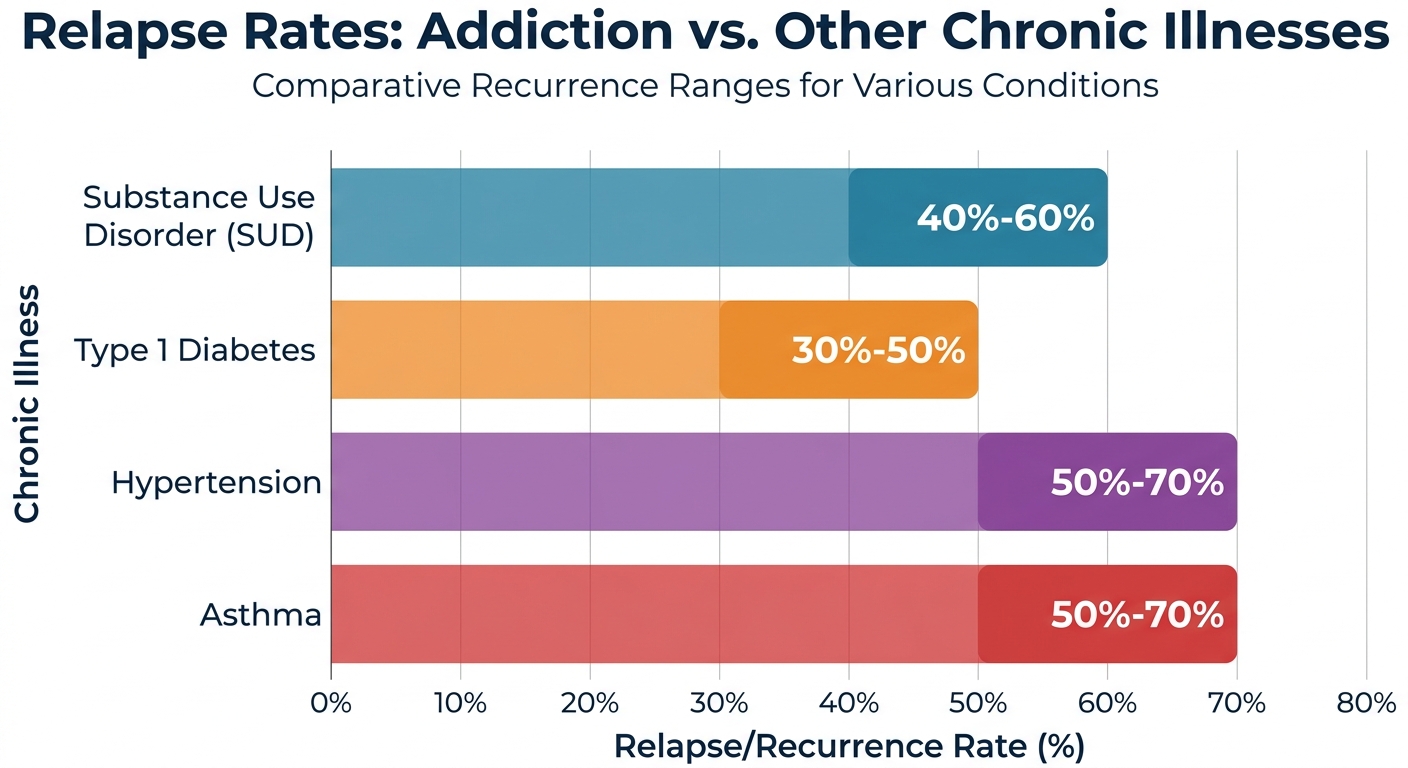
Would we blame someone for needing ongoing diabetes management? Would we say someone with asthma “failed” because they needed to use their inhaler? Of course not. Yet we apply these harsh judgments to addiction recovery, despite the scientific evidence showing it operates similarly to other chronic health conditions.
The Evolution from Acute to Chronic Care Models
Historically, the addiction treatment industry operated on an “acute care” model. The standard was the 28-day program, after which patients were essentially considered “cured” and discharged with minimal follow-up. This approach treated addiction like a broken bone—fix it once, and you’re done.
The results were dismal. Facilities became revolving doors, with the same individuals cycling through treatment repeatedly. The failure wasn’t in the patients; it was in a treatment philosophy that didn’t align with the nature of the disease.
Today, organizations like the American Society of Addiction Medicine advocate for a Chronic Care Management approach. This model recognizes that substance use disorder requires sustained monitoring, periodic adjustments to treatment, and ongoing support—just like managing any other chronic health condition.
What This Means for Your Recovery
Recovery isn’t a linear path. You might have setbacks. You’ll need to adjust your strategies as you encounter new challenges. You may need to increase or decrease the intensity of your support services depending on what’s happening in your life. None of this means you’re failing—it means you’re managing a chronic condition.
Pacific Ridge’s approach reflects this understanding. By treating addiction as a chronic disease requiring long-term management, we design aftercare plans that extend far beyond your discharge date, ensuring you have the tools and support necessary for sustainable recovery.
The Numbers Don’t Lie: How Aftercare Increases Your Chances of Long-Term Sobriety
The difference between receiving aftercare and not receiving aftercare isn’t just significant—it’s potentially life-changing. Research consistently demonstrates that comprehensive continuing care dramatically improves long-term outcomes.
Abstinence Rates: The Aftercare Advantage
When we examine abstinence rates at 12 months post-discharge, a clear pattern emerges:
- Inpatient only (no aftercare): 15-25% abstinence rate
- Inpatient + moderate outpatient therapy: 40-50% abstinence rate
- Inpatient + comprehensive aftercare: 70-80% abstinence rate
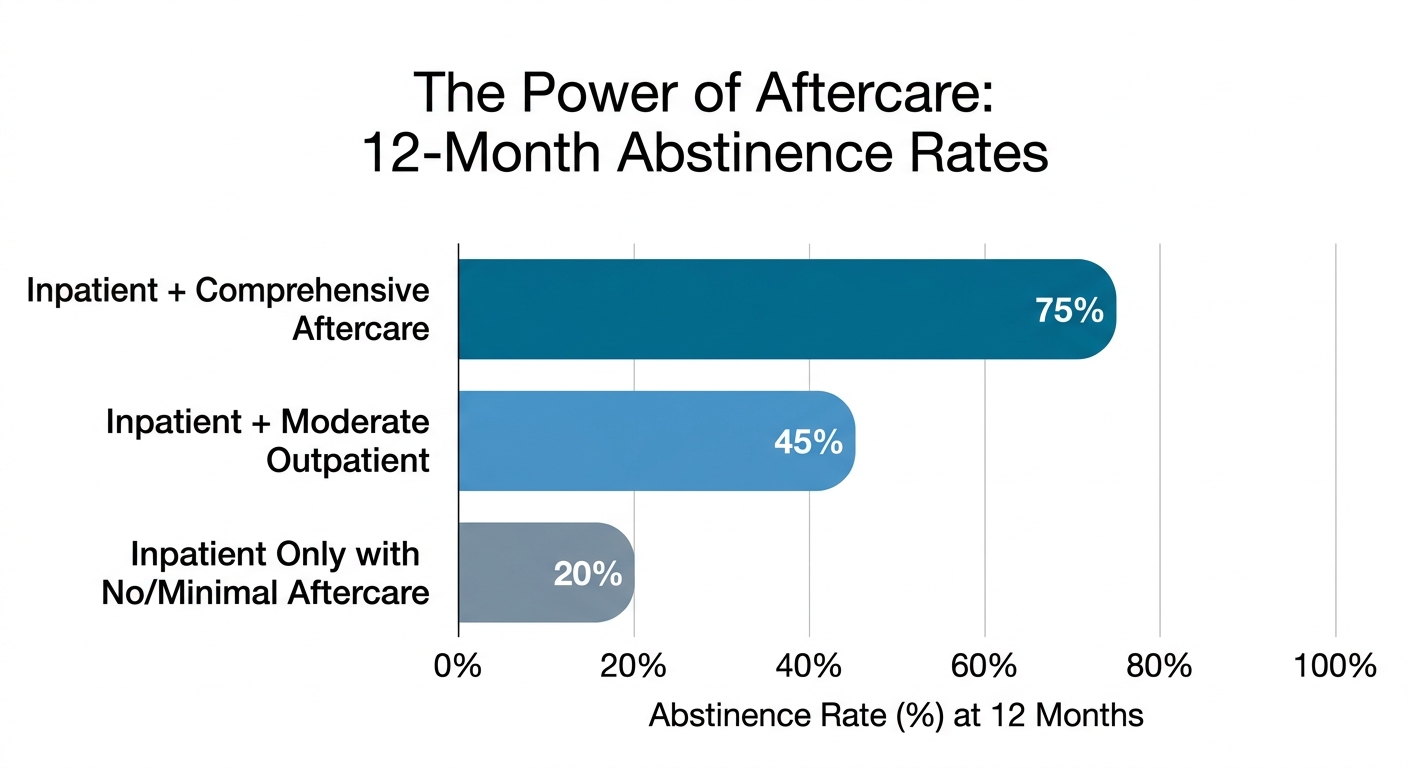
The progression is striking. Each additional layer of support substantially increases the likelihood of maintaining sobriety. Comprehensive aftercare—which includes intensive outpatient programs, support groups, and alumni networks—more than triples the success rate compared to residential treatment alone.
Case Study: Adaptive Continuing Care
A landmark study published in the Journal of Consulting and Clinical Psychology tracked over 300 adults following discharge from intensive substance use disorder treatment. Participants were divided into two groups:
Group 1 (Standard Discharge): Received basic discharge planning with minimal follow-up support.
Group 2 (Adaptive Continuing Care): Received proactive telephone monitoring, therapy adjustments based on real-time stress and triggers, and active assistance connecting with community resources.
Over a 24-month follow-up period, the adaptive continuing care group showed significantly higher total abstinence rates and experienced fewer severe relapses when setbacks did occur. The key factor was responsiveness—care was adjusted based on what was actually happening in participants’ lives rather than following a one-size-fits-all protocol.
What “Comprehensive Aftercare” Actually Means
The most successful aftercare plans share several key components:
- Regular outpatient therapy: Weekly sessions using evidence-based approaches like Cognitive Behavioral Therapy or Dialectical Behavior Therapy help you apply the skills you learned in treatment to real-world situations.
- Participation in peer support groups: Communities like Alcoholics Anonymous, Narcotics Anonymous, or SMART Recovery provide accountability and connection with others who understand your journey.
- Medication-Assisted Treatment when appropriate: FDA-approved medications can help manage cravings and normalize brain chemistry, particularly for opioid and alcohol use disorders.
- Ongoing connection with treatment alumni: Maintaining relationships with people you met in treatment provides a unique form of support—they know where you’ve been and what you’re working toward.
- Sober living arrangements if needed: If returning home means returning to high-risk situations, transitional housing offers structure and accountability during the vulnerable early recovery period.
Pacific Ridge’s Commitment to Your Long-Term Success
At Pacific Ridge, discharge planning doesn’t begin the day before you leave—it starts during intake. Before you walk out our doors, you’ll have a personalized roadmap that includes scheduled therapy appointments, connections to support groups in your area, and access to our alumni resources.
We understand that the transition from residential care to independent living is challenging, which is why we ensure you’re not navigating it alone. Our commitment to your recovery extends well beyond your time in our Jefferson, Oregon facility.
Building Your Safety Net: What a Solid Aftercare Plan Should Include
No two aftercare plans are identical because no two people face identical challenges in recovery. However, the most effective plans share five critical, evidence-based components.
1. Intensive Outpatient Programs or Regular Therapy Sessions
Intensive Outpatient Programs provide a gradual step-down from the intensity of residential care while maintaining clinical oversight. Rather than going from daily structure to complete independence, IOPs typically involve several hours of programming multiple times per week.
Regular individual therapy—whether through an IOP or standalone sessions—gives you a consistent space to process challenges, celebrate victories, and receive professional guidance. Weekly Cognitive Behavioral Therapy or Dialectical Behavior Therapy sessions help you apply coping skills to specific situations you’re encountering in your daily life.
This ongoing clinical relationship provides accountability. Knowing you’ll be discussing your week with a therapist often provides the extra motivation needed to make healthy choices when temptation arises.
2. Medication-Assisted Treatment
For many people, particularly those recovering from opioid or alcohol use disorders, Medication-Assisted Treatment is a crucial component of sustained recovery. FDA-approved medications like Naltrexone, Buprenorphine, and Acamprosate work by helping manage cravings and normalizing brain chemistry.
Despite persistent stigma, MAT is evidence-based medicine, not “replacing one drug with another.” These medications target the same brain circuits affected by substance use, reducing the physical drive to use and making it easier to focus on behavioral changes and rebuilding your life.
The decision to use MAT should be made in consultation with addiction medicine specialists who understand your specific circumstances, substance use history, and recovery goals.
3. Peer Support and Mutual-Help Groups
The power of connection with others in recovery cannot be overstated. Alcoholics Anonymous, Narcotics Anonymous, SMART Recovery, and similar mutual-help groups provide community, shared accountability, and the profound experience of being truly understood by people who’ve walked your path.
Research consistently shows that active participation in mutual-help groups significantly increases long-term abstinence rates. These groups offer something professional treatment cannot: the lived experience of maintaining sobriety over years and decades, modeled by people who’ve faced similar challenges.
The Power of Shared Experience: Don’t underestimate the therapeutic value of simply feeling understood. In a mutual-help group, you don’t have to explain why certain situations are triggering or why recovery is difficult—everyone already knows.
4. Alumni Programs and Facility-Based Support
Staying connected to your treatment community reduces isolation and provides a “safe space” when you need to talk to someone who understands your recovery journey. Pacific Ridge offers alumni events, check-in calls, and ongoing access to resources because we recognize that maintaining these connections supports long-term sobriety.
Alumni programs serve another important function: they remind you how far you’ve come. When you’re struggling, connecting with others from your treatment cohort who are successfully maintaining their sobriety can reignite hope and motivation.
5. Sober Living Environments When Needed
If returning home means returning to high-risk situations—active users in the household, unsafe neighborhoods, or overwhelming family dysfunction—transitional housing provides crucial structure during early recovery.
Sober living homes offer accountability through regular drug testing, house meetings, and peer support from housemates also committed to recovery. They bridge the gap between the highly structured environment of residential treatment and the full independence of living on your own.
For many people, sober living is the difference between maintaining sobriety and relapsing within weeks of discharge. There’s no shame in recognizing you need this level of support—it’s a strategic choice in service of your long-term health.
Pacific Ridge’s Individualized Approach
Every client at Pacific Ridge receives a customized aftercare plan before discharge. These plans account for your specific triggers, living situation, work demands, family dynamics, and the resources available in your geographic area.
We recognize that someone returning to rural Oregon faces different challenges than someone living in Portland, and that someone with family support has different needs than someone living alone. Cookie-cutter aftercare plans don’t work because everyone’s circumstances are unique.
Navigating Oregon’s Behavioral Health Landscape: Why Proactive Planning Is Critical
While Oregon offers natural beauty, strong recovery communities in many areas, and progressive attitudes toward addiction treatment, the state also faces systemic challenges in behavioral health access. These challenges make facility-coordinated aftercare planning even more essential.
Oregon’s Substance Use Disorder Landscape
Oregon ranks high nationally for substance use disorder prevalence, yet the state’s behavioral health infrastructure struggles to meet demand. The Oregon Health Authority has documented significant gaps in outpatient behavioral health services, with long waitlists for therapy and limited Medication-Assisted Treatment providers, particularly in rural areas.
The Gap in Care
You cannot assume that community resources will be readily available when you need them. In many parts of Oregon, the behavioral health safety net is overburdened. Without proactive planning, you might find yourself discharged from residential treatment, motivated to engage in aftercare, but unable to access services for weeks or even months.
This is why Pacific Ridge coordinates your aftercare before you leave our facility. We don’t simply provide a list of resources and wish you luck—we secure therapy appointments, connect you directly with local support groups, and ensure continuity of any medications you’re taking. We bridge the gap between discharge and community-based care.
Pacific Northwest-Specific Considerations
Seasonal Affective Disorder: Oregon’s long, gray winters can trigger depression in people who’ve never experienced it before and exacerbate symptoms in those who have. Depression is a significant relapse risk factor, which is why your aftercare plan should include mental health monitoring, not just addiction-specific support.
Geographic Isolation: If you live in rural Oregon, physical isolation can compound emotional isolation. Telehealth options become critical, as do strong alumni networks that can provide connection even when in-person meetings aren’t practical. Pacific Ridge helps you identify telehealth providers and online support communities that can supplement or replace in-person services when necessary.
Cultural Fit: The Pacific Northwest has a unique recovery culture. While traditional 12-step programs are strong in many areas, there’s also significant interest in alternative approaches, outdoor-based recovery programs, and secular mutual-help groups. Pacific Ridge helps you find the aftercare model that resonates with your values and preferences, rather than forcing you into a one-size-fits-all approach.
Proactive Planning Beats Reactive Crisis Management
Waiting until you’re struggling to seek help often means it’s too late. Cravings can escalate quickly, and once you’re in crisis mode, accessing services becomes exponentially harder. Pacific Ridge’s model ensures support is in place from day one, so you’re building on a foundation rather than scrambling to create one when you’re most vulnerable.
Key Takeaways
- Inpatient treatment provides the foundation for recovery, but recovery itself is built in the months and years that follow. The first 90 days after discharge represent a critical window where neurobiological healing is ongoing and environmental stressors are at their peak.
- Your brain needs time to heal. Post-Acute Withdrawal Syndrome is a real neurobiological phenomenon, not a sign of weakness or insufficient treatment. With the right support, these symptoms are manageable and temporary.
- Addiction is a chronic disease, not a moral failing. Just as someone with diabetes requires ongoing management, sustainable recovery requires continuing care. The evidence is overwhelming: comprehensive aftercare increases 12-month abstinence rates to 70-80%, compared to just 15-25% for residential treatment alone.
- Oregon’s behavioral health system, while improving, still has significant gaps in access to outpatient services. Proactive aftercare planning through your treatment facility bridges gaps, ensuring you don’t fall through the cracks during the vulnerable transition period.
- Recovery is possible. With a solid aftercare plan that includes outpatient therapy, peer support, appropriate medication if needed, and ongoing connection to your treatment community, you can build the life you envisioned when you first walked through the doors of treatment.
You don’t have to navigate this journey alone. Pacific Ridge is committed to being your partner in long-term recovery, not just during your residential stay but throughout the challenging and rewarding process of building a sustainable sober life.
Ready to Build Your Recovery Foundation?
If you or a loved one is preparing to leave residential treatment—or considering taking that crucial first step toward recovery—contact Pacific Ridge to learn how our comprehensive, individualized aftercare planning sets you up for lifelong success.
References:
- National Institute on Drug Abuse (NIDA). (2020). Drugs, Brains, and Behavior: The Science of Addiction – Treatment and Recovery. Retrieved from https://nida.nih.gov/publications/drugs-brains-behavior-science-addiction/treatment-recovery
- U.S. Department of Health and Human Services (HHS), Office of the Surgeon General. (2016). Facing Addiction in America: The Surgeon General’s Report on Alcohol, Drugs, and Health. Retrieved from https://addiction.surgeongeneral.gov/sites/default/files/surgeon-generals-report.pdf
- Substance Abuse and Mental Health Services Administration (SAMHSA). (2022). Recovery and Recovery Support. Retrieved from https://www.samhsa.gov/find-help/recovery
- McKay, J. R. (2009). Continuing care research: What we have learned and where we are going. Journal of Substance Abuse Treatment, 36(2), 131-145. Retrieved from https://www.ncbi.nlm.nih.gov/pmc/articles/PMC2670779/
- American Society of Addiction Medicine (ASAM). (2020). Public Policy Statement on Treatment for Substance Use Disorder. Retrieved from https://www.asam.org/advocacy/public-policy-statements
- Kelly, J. F., Humphreys, K., & Ferri, M. (2020). Alcoholics Anonymous and other 12-step programs for alcohol use disorder. Cochrane Database of Systematic Reviews. Retrieved from https://www.ncbi.nlm.nih.gov/pmc/articles/PMC7065341/
- McKay, J. R., Lynch, K. G., Shepard, D. S., & Pettinati, H. M. (2005). The effectiveness of telephone-based continuing care for alcohol and cocaine dependence: 24-month outcomes. Journal of Consulting and Clinical Psychology, 73(4), 633-644. Retrieved from https://pubmed.ncbi.nlm.nih.gov/16173851/
- Oregon Health Authority (OHA). (2023). Substance Use Disorder (SUD) Services and Reports. Retrieved from https://www.oregon.gov/oha/HSD/AMH/Pages/Addictions.aspx
Posted in Treatment
Are you looking for help?
Pacific Ridge is a residential drug and alcohol treatment facility about an hour from Portland, Oregon, on the outskirts of Salem. We’re here to help individuals and families begin the road to recovery from addiction. Our clients receive quality care without paying the high price of a hospital. Most of our clients come from Oregon and Washington, with many coming from other states as well.
Pacific Ridge is a private alcohol and drug rehab. To be a part of our treatment program, the client must voluntarily agree to cooperate with treatment. Most intakes can be scheduled within 24-48 hours.
Pacific Ridge is a State-licensed detox and residential treatment program for both alcohol and drugs. We provide individualized treatment options, work closely with managed care organizations, and maintain contracts with most insurance companies.
Quick links
Recent Posts
Contact Us
Pacific Ridge- 1587 Pacific Ridge Ln SE
Jefferson, OR 97352 - Email:
[email protected] - Phone:
503-506-0101 - Fax:
503-581-8292

- Copyright © 2026 Pacific Ridge - All Rights Reserved. Web Design & SEO by Lithium
- Follow us on