
Call Us For Easy
Confidential Assistance
503-506-0101
It only takes 5 minutes to get started
Recognizing the Subtle Signs of Fentanyl Use: A Guide for Oregon Families
Posted on: June 4th, 2026 by writer

Table of Contents
- Why Fentanyl Has Changed Everything About Addiction in Oregon
- What Fentanyl Does to the Body: Physical Red Flags You Can’t Ignore
- Beyond the Physical: Behavioral Changes That Signal Fentanyl Use
- Hidden in Plain Sight: The Physical Evidence of Fentanyl Use
- Why You Can’t Just ‘Stop’ Fentanyl: The Medical Realities Families Need to Understand
- Key Takeaways
Picture this: A parent notices their adult child has become increasingly withdrawn. Money disappears from wallets. Strange pieces of burnt aluminum foil appear in the bathroom trash. These aren’t just concerning behaviors—they could be life-or-death warning signs of fentanyl use.
Fentanyl is 50 times stronger than heroin and 100 times stronger than morphine, making it extraordinarily lethal even in microscopic amounts. Between 2019 and 2022, fentanyl-related overdose deaths in Oregon surged by more than 600%. What makes this crisis especially terrifying is that many users don’t even know they’re consuming fentanyl. Street dealers press this deadly synthetic opioid into counterfeit pills that look identical to legitimate prescription medications like Oxycodone, Xanax, or Adderall.
This guide will help Oregon families identify the physical, behavioral, and environmental signs of fentanyl use—and explain why immediate professional intervention at facilities like Pacific Ridge can save lives. The window for action is narrow, but recognizing these warning signs early can mean the difference between intervention and tragedy.
Why Fentanyl Has Changed Everything About Addiction in Oregon
To understand why fentanyl represents such an unprecedented threat, we need to look at how the opioid epidemic has evolved through three distinct waves.
The first wave began in the 1990s with the overprescribing of prescription opioids. Medications like OxyContin were marketed as safe and effective pain management solutions, leading to widespread dependence. When prescribing practices became more restricted around 2010, many individuals who had developed opioid use disorders transitioned to heroin, marking the second wave of the epidemic.
But the third wave—beginning in 2013 and accelerating dramatically since—has proven the most lethal. This phase is dominated by illicitly manufactured fentanyl, a synthetic opioid so potent that a dose the size of a few grains of salt can be fatal.
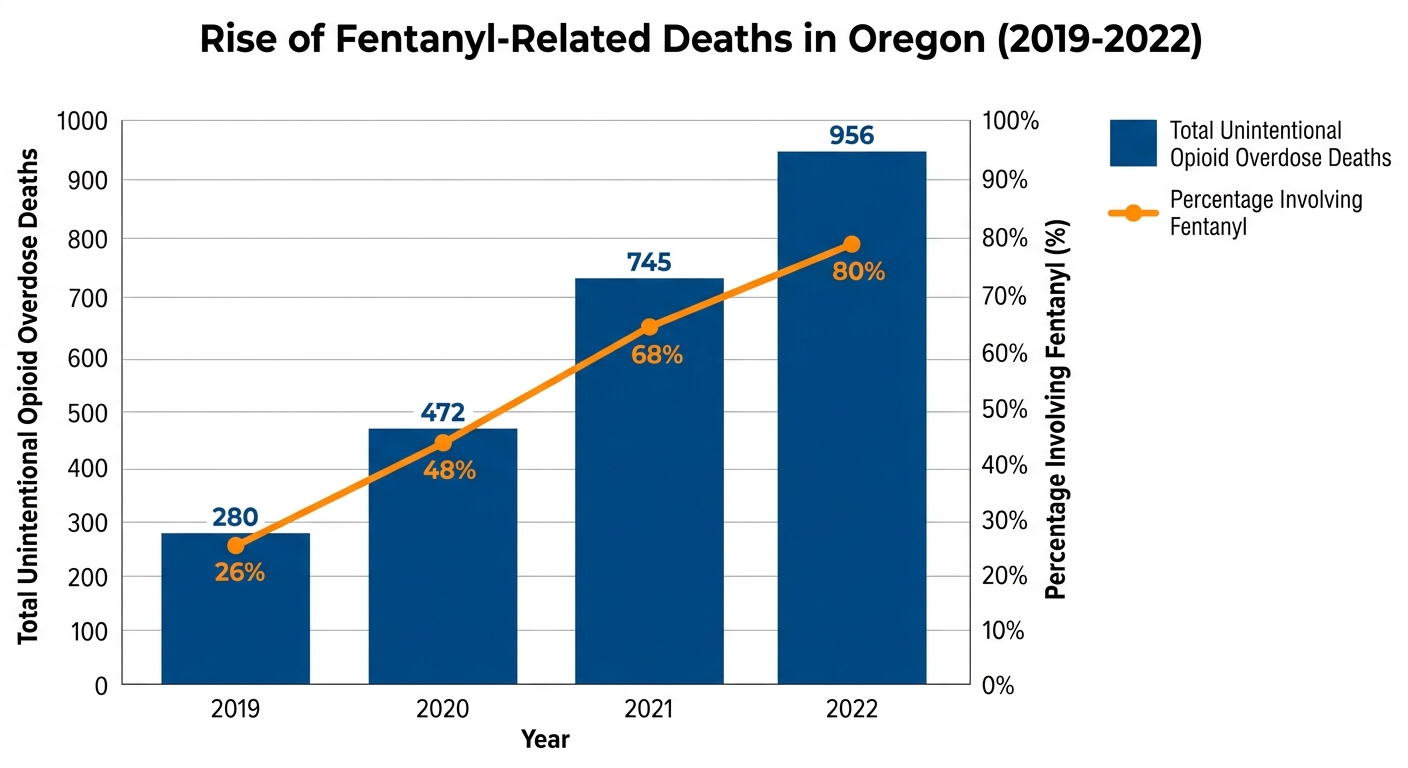
Oregon has experienced this surge with devastating force. In 2019, approximately 26% of opioid deaths in the state involved fentanyl. By 2022, that figure had skyrocketed to over 80%. Total unintentional opioid overdose deaths nearly quadrupled during this same period, climbing from 280 deaths in 2019 to 956 in 2022.
What’s driving these numbers? The “counterfeit pill” phenomenon. Drug trafficking organizations have discovered they can press fentanyl powder into tablets that perfectly mimic legitimate prescription medications. On the streets of Portland, Salem, and Eugene, these pills—particularly blue tablets stamped with “M” on one side and “30” on the other—are known as “blues” or “M30s” because they’re designed to look like 30mg oxycodone tablets.
Critical Fact: The DEA has seized over 3 million fake pills in the Pacific Northwest, with laboratory testing revealing a horrifying statistic: 7 out of 10 counterfeit pills contain a potentially lethal dose of fentanyl.
Even more concerning, the concentration of fentanyl in these pills varies wildly—from 0.02 milligrams to 5.1 milligrams, which is more than twice the lethal dose.
This isn’t just affecting people with long-term substance use disorders. Young adults seeking ADHD medication through social media, individuals looking for pain relief after an injury, or someone experimenting at a party are unwittingly purchasing pills that could kill them on first use. The normalized act of swallowing a pill—something most people have done countless times—has become a game of Russian roulette.
What Fentanyl Does to the Body: Physical Red Flags You Can’t Ignore
Fentanyl profoundly affects the central nervous system in ways that produce observable physical symptoms. Understanding these signs can help families identify use before it progresses to a fatal overdose.
Pinpoint pupils (miosis) are one of the most distinctive indicators of opioid intoxication. When someone uses fentanyl, their pupils become abnormally constricted—appearing as tiny dots even in dim lighting where pupils should naturally dilate. This occurs because opioids stimulate the parasympathetic nervous system, causing the muscles in the iris to contract.
The “nod” is perhaps the most recognizable behavior among fentanyl users. This distinctive pattern involves cycling between consciousness and semi-consciousness, where the person’s head suddenly droops forward as if they’re falling asleep while sitting or standing. They may appear to snap back to alertness momentarily, only to nod off again. This isn’t simple drowsiness—it’s a sign of dangerous central nervous system depression.
Respiratory depression is the primary mechanism by which fentanyl kills. The drug suppresses the brainstem’s automatic breathing centers, causing breathing to become shallow, slow, or irregular. Family members might notice long pauses between breaths, labored breathing, or a breathing rate that has dropped to fewer than 8-10 breaths per minute (normal is 12-20). This is a medical emergency requiring immediate 911 intervention.
⚠️ MEDICAL EMERGENCY:
Cyanosis—a bluish or grayish tint to the lips, fingernails, or skin—indicates that the body isn’t getting enough oxygen. When you see this discoloration, the person is already in severe respiratory distress. This is not a sign to wait and monitor; it requires immediate emergency medical attention and naloxone (Narcan) administration if available.
Sudden weight loss and malnutrition often accompany chronic fentanyl use. The drug suppresses appetite and disrupts normal metabolic function. Users may appear gaunt, with sunken cheeks and prominent bones. Their clothes may hang loosely, and they might skip meals entirely or show little interest in food.
What makes these physical signs particularly challenging to recognize is fentanyl’s rapid action. Unlike traditional opioids where users might experience intoxication for several hours, fentanyl’s effects wear off quickly—often within 30-60 minutes. This means users may cycle between intoxication and withdrawal 10-15 times per day, compared to 2-3 times with heroin. A family member might observe someone appearing completely sober in the morning, heavily intoxicated by mid-morning, experiencing withdrawal by noon, and cycling through these states repeatedly throughout the day.
Actionable Tip:
Pay attention to patterns across different times of day. The rapid cycling between the “nod” followed by agitation, sweating, and restlessness is particularly revealing. If you notice someone exhibiting signs of intoxication multiple times daily with periods of seeming normalcy in between, this pattern suggests fentanyl use.
Remember: any sign of respiratory distress—slow breathing, labored breathing, unresponsiveness, or blue-tinted skin—requires immediate 911 intervention. Don’t wait to see if it improves. Naloxone (Narcan) can reverse an opioid overdose, but brain damage from oxygen deprivation can occur within minutes.
Beyond the Physical: Behavioral Changes That Signal Fentanyl Use
While physical symptoms are often the most obvious indicators, behavioral and psychological changes frequently emerge first—sometimes 2-4 weeks before physical deterioration becomes apparent. This early recognition window is critical for intervention.
Severe mood swings are among the most noticeable behavioral changes. Because fentanyl is so short-acting, users experience dramatic emotional shifts as the drug rapidly enters and exits their system. You might observe someone who seems euphoric and energetic one moment, then becomes intensely irritable, anxious, or depressed an hour later. These aren’t typical mood fluctuations—they’re rapid, extreme, and often seem disconnected from external circumstances.
Financial red flags almost always accompany fentanyl addiction. The short-acting nature of the drug means users need to purchase it multiple times daily, creating an expensive and unsustainable habit. Watch for:
- Unexplained depletion of bank accounts or maxed-out credit cards
- Money or valuables disappearing from the home
- Selling personal possessions, especially items of sentimental or significant monetary value
- Frequent, increasingly implausible requests for money (“my car broke down,” “I have an unexpected bill,” “someone stole my wallet”)
- Taking out loans or borrowing money from multiple people simultaneously
Social isolation typically intensifies as use progresses. The person may withdraw from family gatherings, making excuses to avoid previously enjoyed activities. They might abandon hobbies, drop out of school, or lose their job. Long-standing friendships fade as they spend more time alone or with new social circles connected to their drug use.
Hyper-defensiveness often emerges when family members ask questions about their health, whereabouts, or finances. Simple inquiries are met with aggressive responses, deflection, or accusations that the family is being controlling or invasive. This defensive posture stems from both the shame of addiction and the desperate need to protect their access to the substance.
Sleep pattern disruption is another telling sign. Due to the frequent dosing required to avoid withdrawal, fentanyl users often sleep at odd hours or appear chronically exhausted. They might be awake and active at 3 AM, then sleep through most of the afternoon. Dark circles under the eyes, constant yawning, and complaints of fatigue are common.
New social circles that the family doesn’t recognize can indicate involvement in drug-seeking behaviors. The person may refuse to introduce new friends or acquaintances, become evasive about where they’ve been or who they were with, or start using unfamiliar slang or codes when texting or talking on the phone.
Important Understanding:
It’s crucial for families to understand that these behavioral changes aren’t character flaws or choices. Fentanyl fundamentally alters brain chemistry, hijacking the reward system and creating an overpowering compulsion to use. The person experiencing these changes is struggling with a medical condition that requires professional treatment—not judgment or punishment.
If you recognize these patterns, document what you’re observing without confrontation. Note dates, times, and specific behaviors. This information will be valuable when consulting with addiction professionals or planning an intervention. The goal isn’t to gather evidence for an accusation, but to build a clear picture of the situation so you can get appropriate help.
Hidden in Plain Sight: The Physical Evidence of Fentanyl Use
Understanding what fentanyl paraphernalia looks like can help families identify use before it progresses to more dangerous stages. The methods of consuming fentanyl have shifted significantly from traditional injection-based opioid use, making some of the evidence less immediately recognizable.
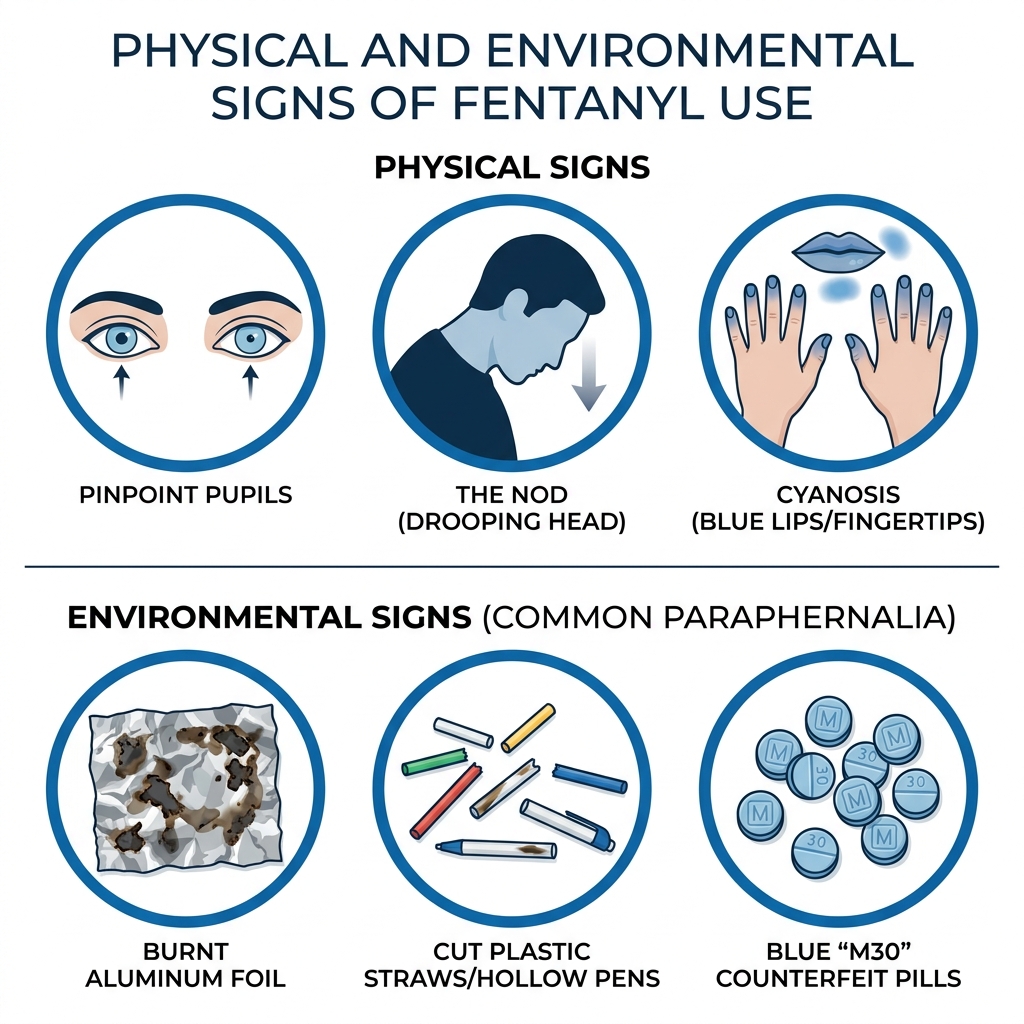
Smoking has become the primary consumption method for fentanyl pills, representing a departure from the injection practices associated with heroin. This shift has important implications for what families might discover.
Smudged tin foil is perhaps the most common piece of paraphernalia. Users place crushed fentanyl pills on small squares of aluminum foil, heat the foil from underneath with a lighter, and inhale the vapors through a straw or hollowed pen as the powder liquefies and produces smoke. The foil will have dark, streaky burn marks running along it. This practice is sometimes called “sliding” or “chasing the dragon.”
Hollowed-out pens or cut straws serve as improvised inhalation devices. Users remove the ink cartridge from a pen or cut a plastic straw to a few inches in length, then use it to inhale the fentanyl vapors rising from the heated foil. These items might be found hidden in unusual places—tucked into pockets, stashed in drawers, or left in vehicles.
The counterfeit pills themselves are critical evidence. The most common are small blue tablets stamped with “M” on one side and “30” on the other, designed to mimic 30mg oxycodone tablets. However, counterfeit Xanax bars (white rectangular tablets with score marks) and fake Adderall tablets (orange or blue round pills) are also increasingly common. These pills often have imperfections that distinguish them from legitimate pharmaceuticals—uneven coloring, rough edges, or inconsistent stamping.
Naloxone (Narcan) kits present an ironic indicator. Some users keep overdose reversal medication on hand because they recognize the deadly nature of the substance they’re consuming. Finding naloxone nasal spray or injectable kits among someone’s belongings may indicate they’re using high-risk opioids.
Additional paraphernalia to watch for includes:
- Lighters with residue or excessive use despite the person not being a smoker
- Small plastic baggies, often colorful or printed with logos
- Pill crushers or grinders
- Burnt spoons (less common with fentanyl pills than with heroin, but still encountered)
- Cotton balls or Q-tips with discoloration
Critical Guidance:
If you discover any of these items, it’s essential to approach the situation carefully. Do not confront your loved one alone or immediately, as this can trigger defensive behavior, denial, or fleeing. Individuals struggling with addiction often feel deep shame and may react unpredictably when confronted.
Instead, document what you’ve found—take photos if possible, note the location and date—and consult with an addiction professional or interventionist before taking further action. Organizations like Pacific Ridge can guide families through the process of addressing the situation in a way that maximizes the chances of your loved one accepting help rather than becoming more entrenched in denial.
Remember that discovering paraphernalia isn’t about catching someone in wrongdoing—it’s about identifying a life-threatening medical condition that requires immediate professional intervention.
Why You Can’t Just ‘Stop’ Fentanyl: The Medical Realities Families Need to Understand
When families discover a loved one is using fentanyl, the natural instinct is often to encourage them to “just stop.” This well-meaning advice fundamentally misunderstands the unique pharmacological properties of fentanyl that make unassisted detox not only ineffective but potentially dangerous.
Understanding fentanyl’s action in the body requires examining how it differs from traditional opioids. Fentanyl is highly lipophilic, meaning it’s fat-soluble and crosses the blood-brain barrier almost instantly. This property creates the intense, immediate euphoria that makes the drug so addictive—but it also means respiratory depression occurs just as rapidly, contributing to its lethality.
The drug clears from the bloodstream quickly, which is why its euphoric effects are so short-lived compared to other opioids. While someone using heroin might inject 2-3 times daily to maintain effects and avoid withdrawal, a fentanyl user often needs to consume the drug 10-15 times daily.
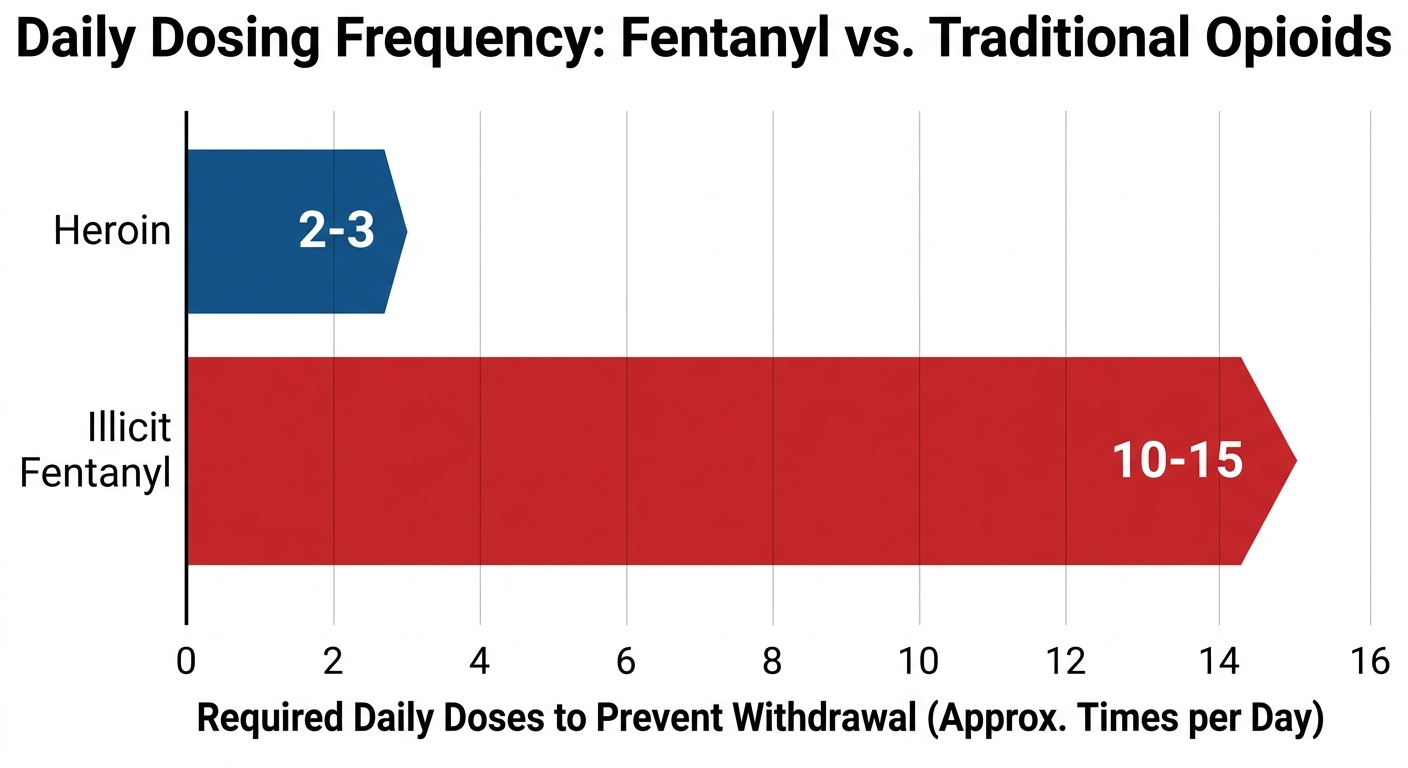
This frequent dosing pattern creates a physiological dependence that’s extraordinarily difficult to break without medical support.
Withdrawal from fentanyl is uniquely severe. While opioid withdrawal is rarely life-threatening (unlike alcohol or benzodiazepine withdrawal), it’s extraordinarily painful and psychologically unbearable. Symptoms begin within 4-6 hours of the last dose and include:
- Severe vomiting and diarrhea leading to rapid dehydration
- Intense muscle and bone pain described as feeling like “bones breaking”
- Extreme anxiety, panic attacks, and dysphoria
- Profuse sweating and chills
- Rapid heartbeat and elevated blood pressure
- Insomnia and severe restlessness
- Intense drug cravings
The intensity of these symptoms drives even the most motivated individuals back to use within 48-72 hours. Attempting fentanyl detox at home has a failure rate exceeding 90%. The physical and psychological pain isn’t something that can be overcome through willpower alone—the body is in a state of physiological crisis that requires medical intervention.
The precipitated withdrawal trap adds another layer of complexity. Medication-assisted treatment with buprenorphine (commonly known by the brand name Suboxone) is highly effective for treating opioid use disorder—but with fentanyl, the timing of induction is critical.
Buprenorphine is a partial opioid agonist, meaning it binds to opioid receptors but doesn’t activate them as fully as fentanyl does. If someone takes buprenorphine while fentanyl is still in their system, the buprenorphine essentially kicks the fentanyl off the receptors and replaces it with weaker activation. This precipitates immediate, severe withdrawal symptoms—essentially accelerating withdrawal instead of relieving it.
Because fentanyl stores in fat tissues and releases slowly, it can remain in the system longer than blood tests suggest. Users who try to start buprenorphine on their own often experience precipitated withdrawal, which is so agonizing that they immediately return to illicit fentanyl for relief. This failed attempt reinforces the belief that nothing can help them, deepening hopelessness.
Medical detox provides what at-home attempts cannot:
24/7 medical monitoring ensures that complications are identified and addressed immediately. Healthcare professionals can track vital signs, manage dehydration and electrolyte imbalances, and intervene if medical emergencies arise.
Comfort medications significantly reduce withdrawal severity. These may include medications for nausea, diarrhea, muscle pain, anxiety, and sleep disturbances. While these don’t eliminate withdrawal entirely, they make it manageable—reducing what would be an unbearable experience to something difficult but tolerable.
Safe, properly timed medication-assisted treatment induction under physician supervision avoids the precipitated withdrawal trap. Medical professionals use validated protocols to determine when it’s safe to begin buprenorphine, often starting with low doses and monitoring the patient’s response carefully.
Psychological support addresses the mental health crisis that accompanies withdrawal. Anxiety, depression, and intense cravings require therapeutic intervention, not just medical management. Counselors, therapists, and peer support specialists provide the emotional scaffolding that helps patients endure the detox process.
Pacific Ridge’s comprehensive approach integrates all these elements in a comfortable, private setting designed specifically for Oregon residents. The facility’s evidence-based medical detox protocols recognize that fentanyl withdrawal requires specialized care that differs from traditional opioid detox.
Importantly, detox is only the beginning of recovery—not the end. Following medical stabilization, seamless transition to residential treatment addresses the underlying factors that contributed to substance use: trauma, co-occurring mental health conditions, relationship dynamics, and coping skill deficits. Without this continued care, relapse rates remain tragically high.
For families watching a loved one struggle with fentanyl addiction, understanding these medical realities is crucial. The person you love isn’t choosing to continue using because they lack willpower or don’t care about the consequences. They’re trapped in a physiological dependence so powerful that attempting to break free without medical support is nearly impossible. Professional intervention isn’t a luxury or a sign of weakness—it’s a medical necessity that can save their life.
Key Takeaways
Recognizing the signs of fentanyl use has become a matter of life and death for Oregon families. The drug’s extraordinary potency and rapid proliferation across the state have transformed the landscape of addiction, creating an unprecedented public health emergency.
The three-part recognition framework provides families with concrete indicators to watch for:
Physical signs include pinpoint pupils that remain constricted even in dim light, the distinctive “nodding” behavior where users cycle between consciousness and semi-consciousness, respiratory depression marked by slow or irregular breathing, bluish discoloration of lips or fingernails indicating oxygen deprivation, and sudden weight loss accompanied by malnutrition.
Behavioral shifts often emerge before physical decline becomes obvious. Watch for severe mood swings cycling rapidly between euphoria and irritability, unexplained financial problems or money disappearing, increasing isolation from family and previously enjoyed activities, hyper-defensive responses to simple questions, disrupted sleep patterns, and involvement with unfamiliar social circles.
Environmental evidence has shifted from traditional injection paraphernalia to smoking-related items: smudged aluminum foil with burn streaks, hollowed pens or cut straws used for inhaling vapors, counterfeit pills (especially blue M30 tablets), naloxone kits, and lighters with residue.
It’s devastating to suspect someone you love is using fentanyl. The fear, helplessness, and heartbreak families experience is profound. But awareness and swift action save lives.
If you recognize these warning signs in your loved one, you are not alone, and it’s not too late. Thousands of Oregon families are navigating this same crisis, and proven paths to recovery exist. The person struggling with fentanyl addiction needs more than love and support—they need specialized medical intervention that addresses the unique challenges this drug presents.
Professional facilities like Pacific Ridge understand the complex medical needs of fentanyl detox. Their evidence-based protocols provide the foundation for lasting recovery through medically supervised withdrawal management, safe medication-assisted treatment induction, comprehensive psychological support, and seamless transition to residential treatment that addresses underlying factors driving addiction.
The window for intervention may be narrow, but every day presents an opportunity to guide your loved one toward help. Don’t wait for the situation to worsen or for a crisis to force action. Early intervention offers the best chance for successful recovery.
Take Action Today
If you’ve noticed any of these warning signs in your loved one, don’t wait another day. Early intervention can be the difference between life and loss.
Compassionate professionals are available 24/7 to answer questions, assess your situation, and guide you through the next steps.
References:
- Centers for Disease Control and Prevention (CDC). (2023). Fentanyl Facts
- Centers for Disease Control and Prevention (CDC). (2022). Understanding the Opioid Overdose Epidemic
- Oregon Health Authority (OHA). (2023). Oregon Unintentional Drug Overdose Toxicity Dashboard
- United States Drug Enforcement Administration (DEA). (2024). One Pill Can Kill
- National Institute on Drug Abuse (NIDA). (2021). Fentanyl DrugFacts
- National Library of Medicine. (2023). Pharmacokinetics and Pharmacodynamics of Fentanyl. StatPearls Publishing
- Substance Abuse and Mental Health Services Administration (SAMHSA). (2023). Buprenorphine and Precipitated Withdrawal
- Substance Abuse and Mental Health Services Administration (SAMHSA). (2015). Clinical Guidelines for the Use of Buprenorphine in the Treatment of Opioid Addiction. TIP 40
Posted in Treatment
Are you looking for help?
Pacific Ridge is a residential drug and alcohol treatment facility about an hour from Portland, Oregon, on the outskirts of Salem. We’re here to help individuals and families begin the road to recovery from addiction. Our clients receive quality care without paying the high price of a hospital. Most of our clients come from Oregon and Washington, with many coming from other states as well.
Pacific Ridge is a private alcohol and drug rehab. To be a part of our treatment program, the client must voluntarily agree to cooperate with treatment. Most intakes can be scheduled within 24-48 hours.
Pacific Ridge is a State-licensed detox and residential treatment program for both alcohol and drugs. We provide individualized treatment options, work closely with managed care organizations, and maintain contracts with most insurance companies.

Quick links
Recent Posts
Contact Us
Pacific Ridge- 1587 Pacific Ridge Ln SE
Jefferson, OR 97352 - Email:
[email protected] - Phone:
503-506-0101 - Fax:
503-581-8292

- Copyright © 2026 Pacific Ridge - All Rights Reserved. Web Design & SEO by Lithium
- Follow us on